Severe Bleeding: What to Do in the Minutes Before Help Arrives
At a Glance: 5 Steps to Stop Severe Bleeding
If someone is bleeding heavily, follow these steps immediately:
Check for Danger:Ensure the area is safe for you to help.
Call 000:Dial emergency services or ask a bystander to call.
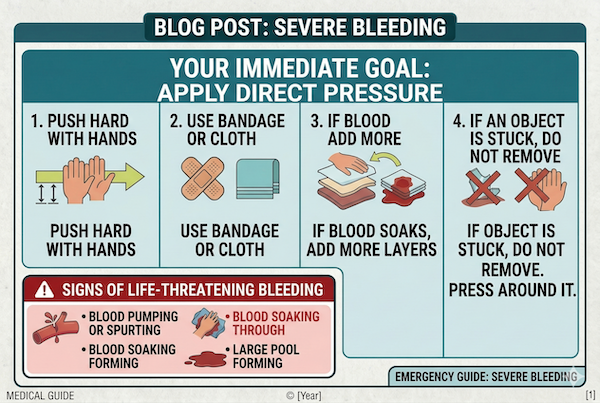
Apply Direct Pressure:Use a clean cloth or bandage to press hard directly on the wound.
Keep Pressing:Do not lift the cloth to check the wound; add more layers if blood soaks through.
Use a Tourniquet:If bleeding is on a limb and won't stop with pressure, apply a tourniquet above the wound.
Don't wait—seconds count. Continue pressure until paramedics arrive.
Severe bleeding is one of the most time-critical emergencies a bystander will ever face. In the right conditions, a person can lose enough blood to go into shock within minutes. Knowing what to do in those first minutes can significantly change the outcome.
You do not need medical training. You need to know a small number of actions and be confident enough to take them without delay.
How to Recognise Life-Threatening Bleeding
Not all bleeding is an emergency. The signs that bleeding may be life threatening include:
Blood spurting or pumping from a wound
Blood flowing continuously without slowing
Clothing or dressings soaking through rapidly
A large pool of blood forming on the ground
Injury resulting in the loss of part of a limb
The person becoming pale, confused, or losing consciousness
If you see any of these signs, treat the situation as a medical emergency and call 000 immediately.
Book your Australian First Aid Certification here
Why Severe Bleeding Is So Dangerous
Blood carries oxygen to the brain, heart, and other vital organs. When significant blood volume is lost, the heart struggles to maintain circulation. Blood pressure drops. Organs begin to receive less oxygen.
This is called hypovolaemic shock. If it is not reversed, it can lead to organ failure and cardiac arrest. The faster bleeding is controlled, the better the chances of a full recovery.
The First Step: Your Safety
Before helping anyone who is bleeding, take a moment to check that the scene is safe. Look for ongoing hazards such as traffic, machinery, or an unstable environment. If the scene is not safe, do not enter it.
Call 000 and wait for emergency services.
Where possible, use gloves or a barrier such as a plastic bag to protect yourself from blood contact. If no protection is available, direct pressure is still more important than the risk of infection.
Book your Australian First Aid Certification here
How to Control Severe Bleeding
Call 000 immediately or ask someone nearby to call while you begin first aid.
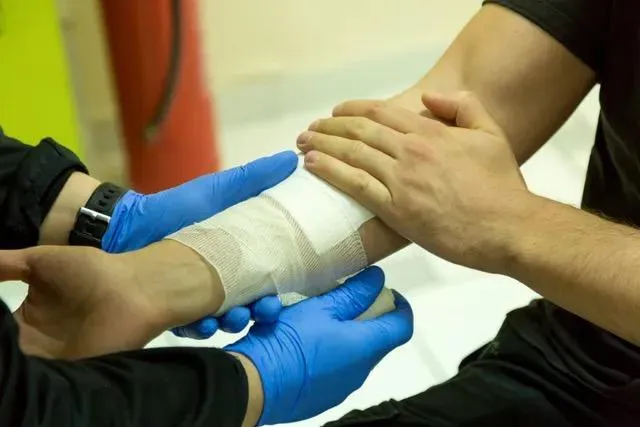
Apply firm, direct pressure to the wound using a clean cloth, dressing, bandage, or any available material.
Press down hard and hold the pressure continuously. Do not remove the dressing to check if bleeding has slowed.
If blood soaks through, add more material on top. Removing the first layer can dislodge clots that are forming.
If the wound is on a limb and bleeding is uncontrolled, a tourniquet applied above the wound may be required.
Keep the person still and calm. Lay them down if possible.
Monitor them for signs of shock: pale skin, rapid breathing, confusion, or loss of consciousness.
Continue pressure until emergency services arrive. Do not stop.
Tourniquets: When They Are Needed
A tourniquet is a tight band applied above a wound to stop blood flow to that section of the limb. It is appropriate when:
Bleeding cannot be controlled with direct pressure
The wound is on an arm or leg
There is a partial or complete amputation
A tourniquet must be applied tightly enough to stop all blood flow. Note the time it was applied and inform emergency services when they arrive.
Modern workplace first aid kits are increasingly including commercial tourniquets. Knowing how to use one correctly is a skill worth practising.
Book your Advanced or Remote First Aid Certification here
If the Person Stops Breathing
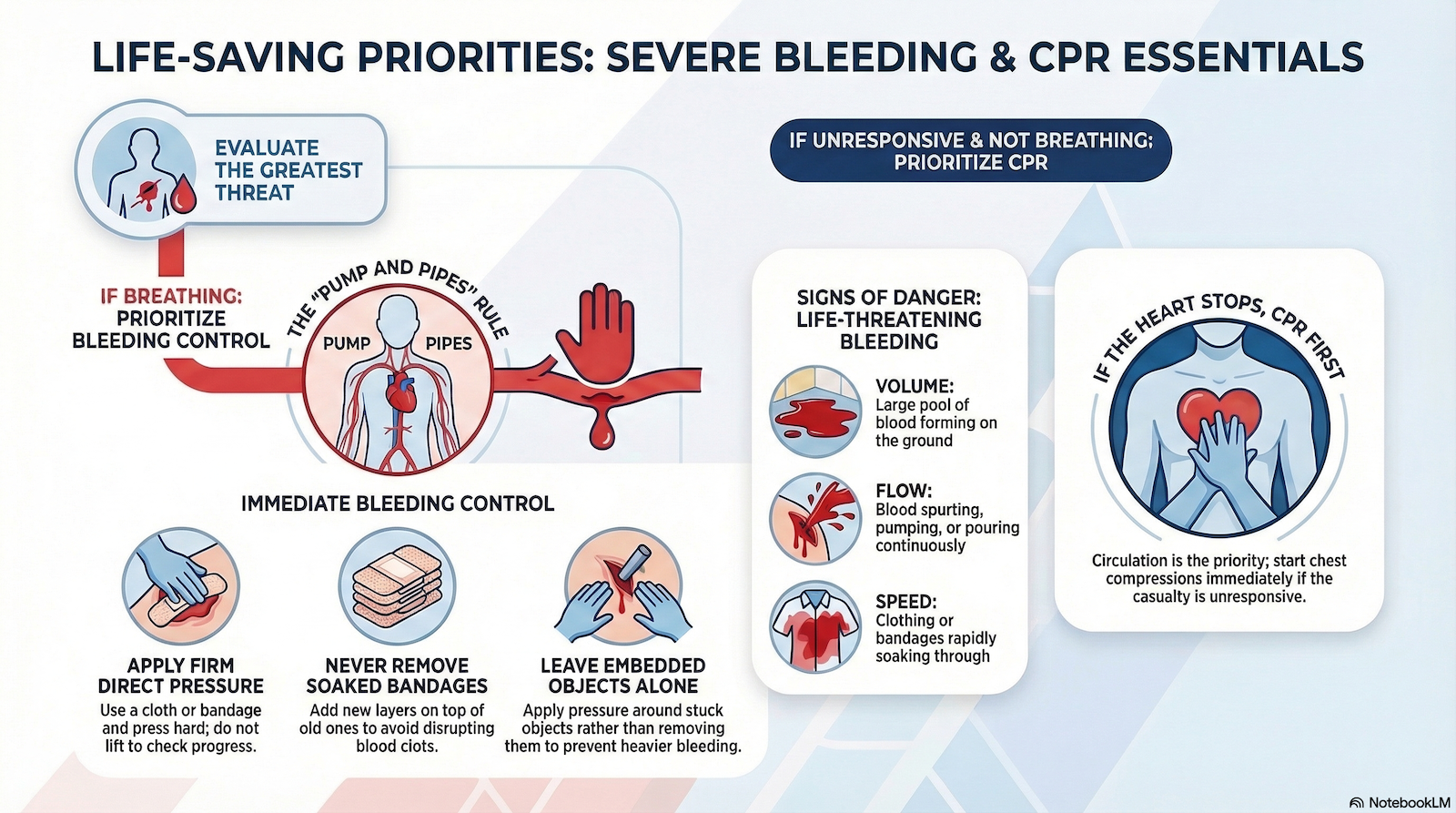
If the person becomes unresponsive and stops breathing normally, begin CPR immediately. This takes priority over wound care at that point.
The Australian Resuscitation Council is clear on this. CPR is always the priority if the heart stops pumping.
Frequently Asked Questions About Bleeding Control
Q: Should I remove a bandage if it becomes soaked with blood?
A:No. Never remove the original bandage or cloth. Doing so can tear away clots that have started to form. Simply place a fresh, clean dressing directly over the soaked one and continue applying firm pressure.
Q: Can I use a belt as a makeshift tourniquet?
A:While a commercial tourniquet is always preferred for safety and effectiveness, in a life-or-death emergency where a limb is involved and direct pressure fails, an improvised tourniquet (like a sturdy belt or triangular bandage) may be used. However, it must be wide and tightened significantly to stop the arterial flow.
Q: When should I stop applying pressure to a wound?
A:You should only stop applying pressure once emergency medical services (000) have arrived and taken over, or if the scene becomes too dangerous for you to remain. Do not stop just because the bleeding seems to have slowed.
Q: What is the most common mistake when treating severe bleeding?
A:The most common mistake is not applying enough pressure or releasing the pressure too soon to "check" if the wound is healing. Constant, heavy, and uninterrupted pressure is required to stop life-threatening blood loss.
Build Your Confidence with Hands-On Training
Reading about bleeding control is helpful. Practising it in a realistic training environment is what builds the confidence to act under pressure.
Nationally recognised first aid courses include hands-on wound management and bleeding control practice, Advanced and Remote First Aid Training both include the correct use of tourniquets and haemostatic dressings.
Book your first aid certification at firstaidcertification.net.au
Training and Assessment is delivered by Britt at Regional Education and Career Help Australia on behalf of ABC First Aid RTO 3399.